

Ricotta Meatballs
“Do you have a good meatball recipe?” I get asked this question often enough that

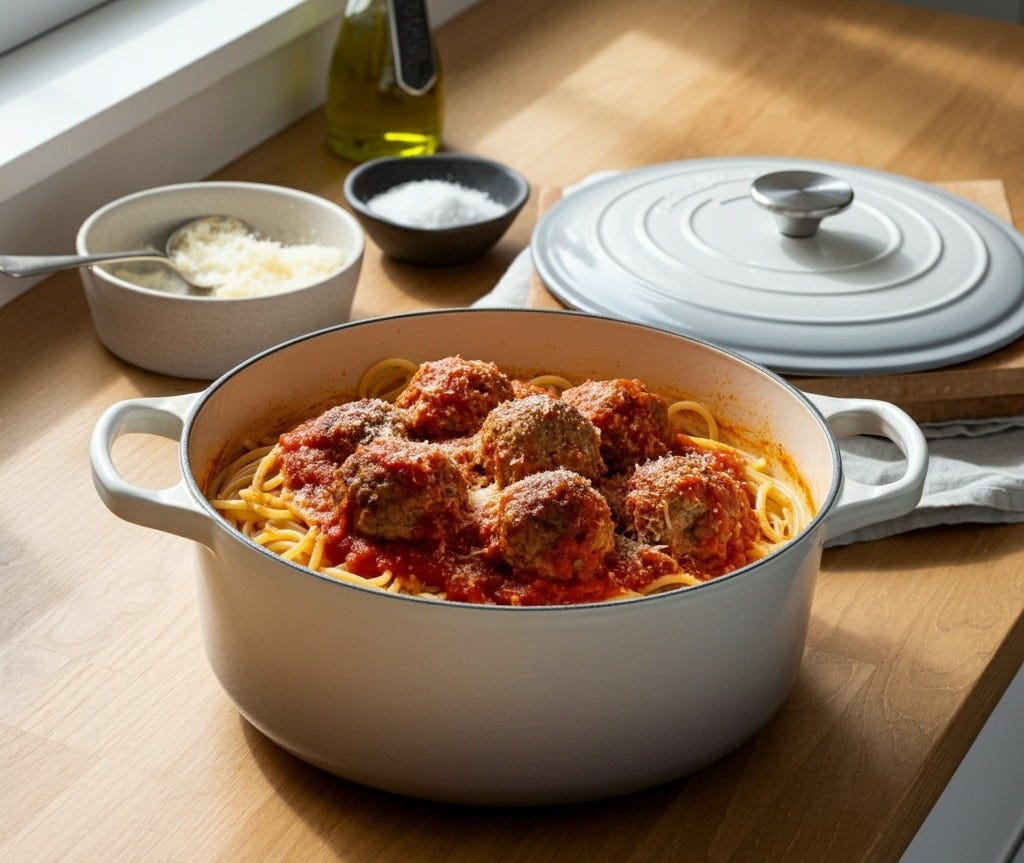
I’ve started to wonder how so many people are wandering around aimlessly in meatball land. I suppose I’ve taken it for granted—having what I consider a stellar meatball recipe for so long that it’s second nature to me. I’ve also assumed that everyone makes their meatballs the same way I do, but apparently, my recipe has a couple of ingredients that raise eyebrows.
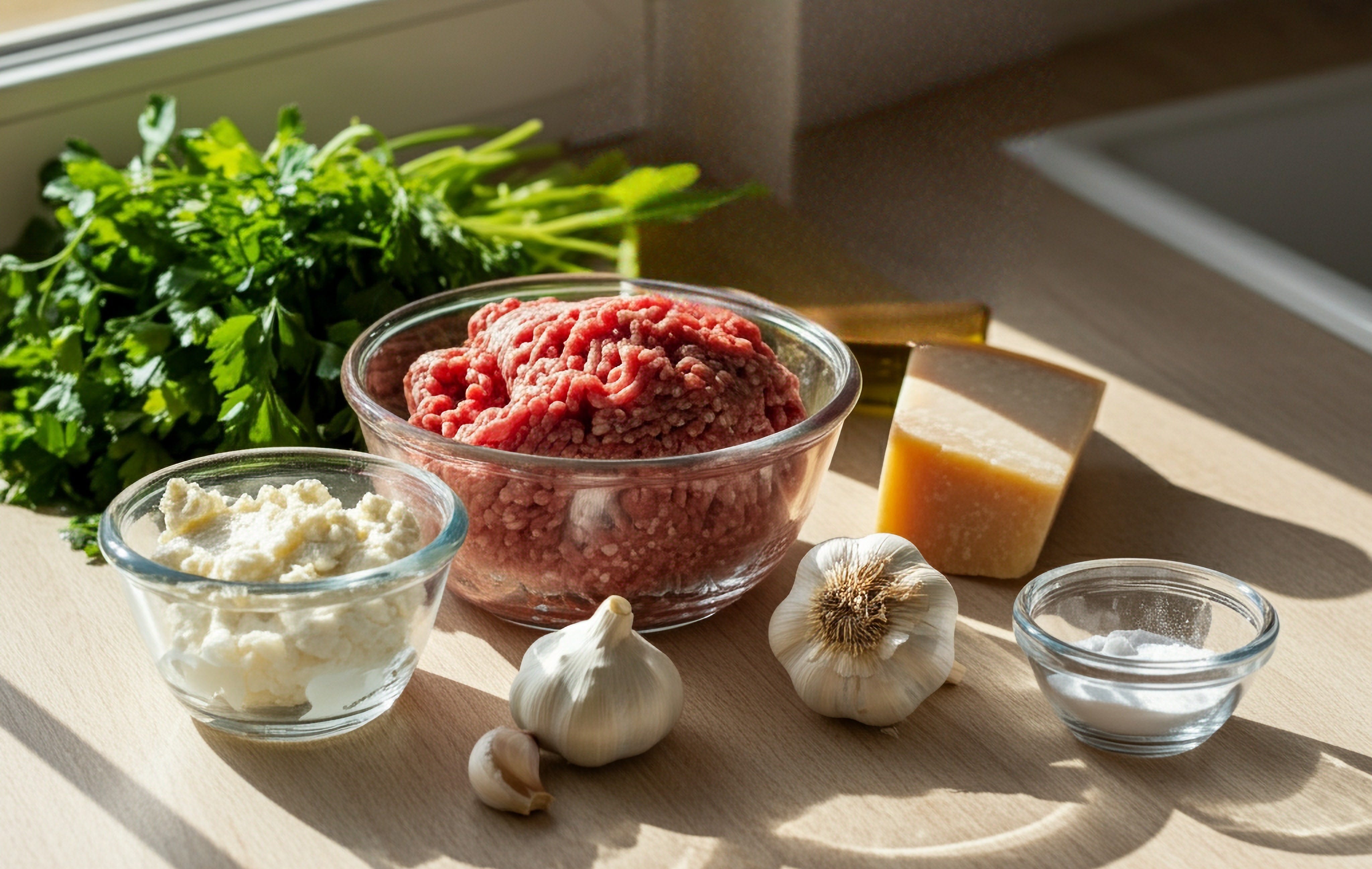
The first? Ricotta cheese.
“Ricotta? In meatballs? Really? Can you taste it?”
This question always makes me pause. Not because it’s unreasonable, but because ricotta is so mild that its flavor gets completely eclipsed by the more dominant players in a meatball. And, truthfully, its flavor isn’t why it’s there in the first place.
Ricotta cheese does for meatballs what sour cream does for banana bread—it adds moisture and tenderness without altering the flavor in a noticeable way. Adding a full cup of ricotta per pound of ground meat guarantees meatballs that are soft, juicy, and impossible to overcook.
But for truly melt-in-your-mouth meatballs—the kind that taste like they’ve been simmering away all day—I take things one step further. Enter: baking soda. A small amount of baking soda raises the pH of the meat, which makes it harder for the proteins to bond as they cook. The result? An even more tender, almost pillowy texture.
These two ingredients might not be traditional, but they are transformative. And with them, I’m convinced you’ll never wander aimlessly around in meatball land again.
Some Notes On The Recipe:
Choose the Right Meat: Avoid using low-fat meats. Fat is essential for tender meatballs. I recommend using beef that’s 80% or 85% lean.
Save the low fat ricotta for another use: Use whole milk ricotta for the same reason you want to use a fattier ground beef. More fat means a more tender meatball.
Don’t Skip Key Steps: Baking soda helps keep the meatballs tender, and moistening the breadcrumbs ensures they stay juicy.
Taste Test the Mixture: Before forming all your meatballs, take a moment to cook a small test patty in olive oil. Taste it to ensure the seasoning is spot-on. If it’s lacking, adjust the salt in the mixture and repeat if necessary for perfection.
Skip this recipe when you want to simmer the meatballs all day: The pro of this recipe is that you have tender, melt-in-your-mouth meatballs after only 30 minutes in the oven. The con is that they would most likely fall apart if simmered for hours like in a traditional Sunday Sauce, as my mother-in-law Chris might do. (I will share her recipe soon!). Make this recipe when you want that all day simmered texture in weekday time.
Ricotta Meatballs
Makes about 20 meatballs - Serves about 6
Ingredients
MEATBALLS:
8 oz (1 cup) whole milk ricotta cheese
1 cup panko breadcrumbs
1 egg
Kosher salt
½ teaspoon baking soda
1 tablespoon water
2 tablespoons olive oil
2 medium shallots, peeled and finely minced
3 cloves garlic, finely minced (I like to use a garlic press or a microplane)
¼ cup packed chopped Fresh parsley (Italian or flat leaf)
1 cup grated parmesan cheese
1 teaspoon lemon zest, grated on a microplane
1 lb ground beef, 85%
Freshly cracked black pepper to taste
TOMATO SAUCE:
2 tablespoons extra-virgin olive oil
½ large yellow onion, finely diced
3 teaspoons kosher salt, divided
5 medium garlic cloves, minced or pressed through garlic press
2 teaspoons dried oregano
2 (28-ounce) cans crushed tomatoes
Freshly cracked black pepper
½ cup minced fresh basil leaves
Extra grated parmesan cheese, for serving
Directions:
FOR THE MEATBALLS: In a large bowl, mix the ricotta, panko breadcrumbs, egg and kosher salt together. Set aside while you prep the rest of the ingredients like chopping the parsley and the shallots, or let this mixture stand at least 10 minutes (this will start to soften the panko breadcrumbs).
Line a sheet pan with foil and spray well with nonstick cooking spray and set aside.
In a small bowl, mix the baking soda with the water until well combined. Set aside.
Heat olive oil in skillet over medium heat until shimmering. Add shallot and cook, stirring occasionally, until softened, about 5-6 minutes. Add garlic and cook, stirring frequently, until fragrant, about 30 seconds. Take off heat and set aside to cool but keep the skillet handy so you can cook a small portion of the meatball mix to check for seasoning. (Just wipe it clean with a paper towel).
Once cool, add the shallot mixture to the ricotta mixture, along with the chopped parsley, parmesan cheese, lemon zest, ground beef, baking soda mixture and freshly cracked black pepper to taste. Mix well with your hands, squeezing the mixture through your fingers until combined. In the skillet you used to cook the shallots, place about a teaspoon of oil and set over medium high heat. Take a small portion (about a tablespoon) of the meatball mix and flatten it out so it cooks faster, and cook in the skillet a few minutes per side just until it’s browned and cooked through. Taste for seasoning - this is the time to add it, before you roll the whole batch into meatballs.
Preheat oven to 450 F while you shape the meatballs.
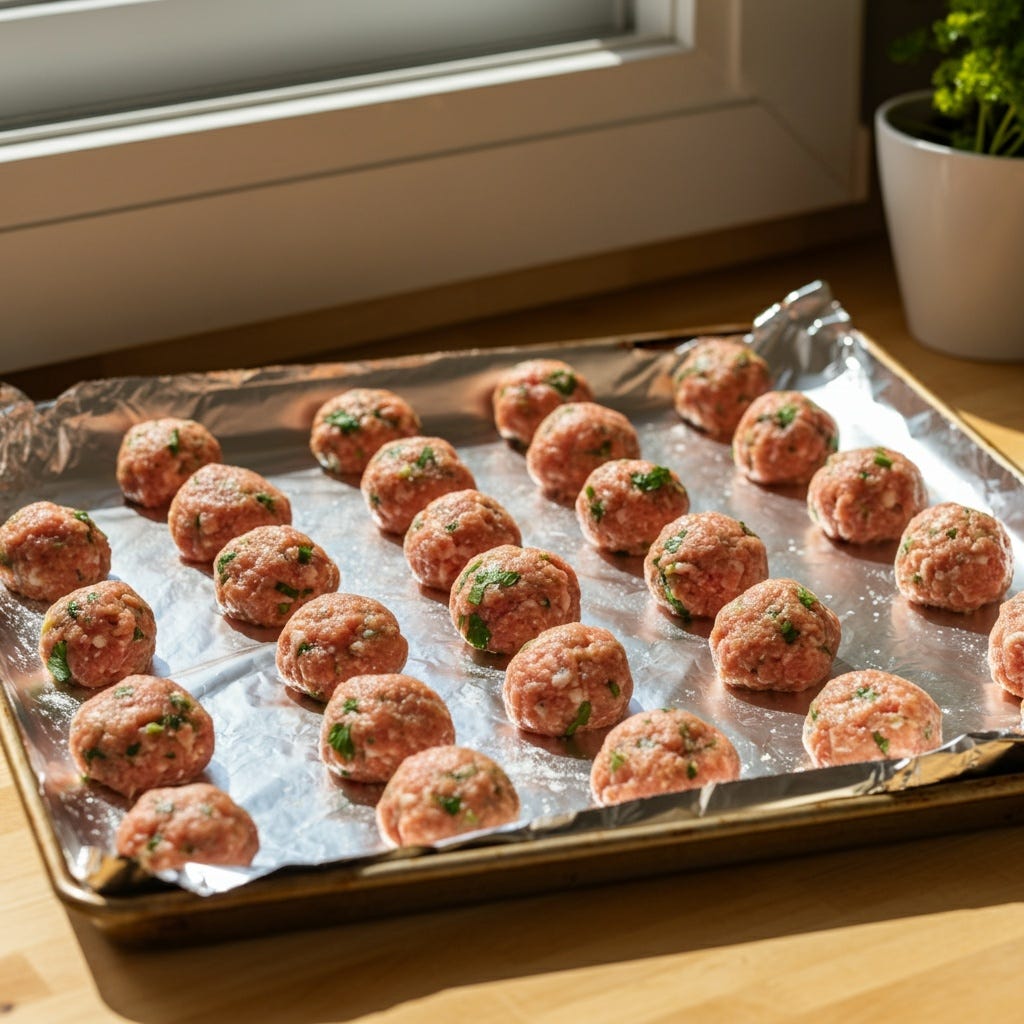
Placing on the prepared sheet pan, shape mixture with greased hands into even size meatballs, about 2 tablespoons each. I like using a portion scoop for this first, and then rolling them into meatballs. A #30 scoop is perfect for this. You should get about 20 meatballs.
Place into the preheated oven and roast until brown, for about 30 minutes. Remove from oven and let cool about 15 minutes before moving so they don’t fall apart.
Meanwhile make the sauce:
FOR THE SAUCE: While meatballs roast, heat olive oil in large heavy bottomed pot over medium heat until shimmering. Add onion and 1 teaspoon kosher salt and cook, stirring occasionally, until softened and golden around edges, 6 to 8 minutes. Add garlic and oregano; cook, stirring frequently, until fragrant, about 30 seconds. Stir in crushed tomatoes and 2 teaspoons kosher salt, and black pepper to taste. Reduce heat to medium-low and simmer until slightly thickened, about 15 minutes.
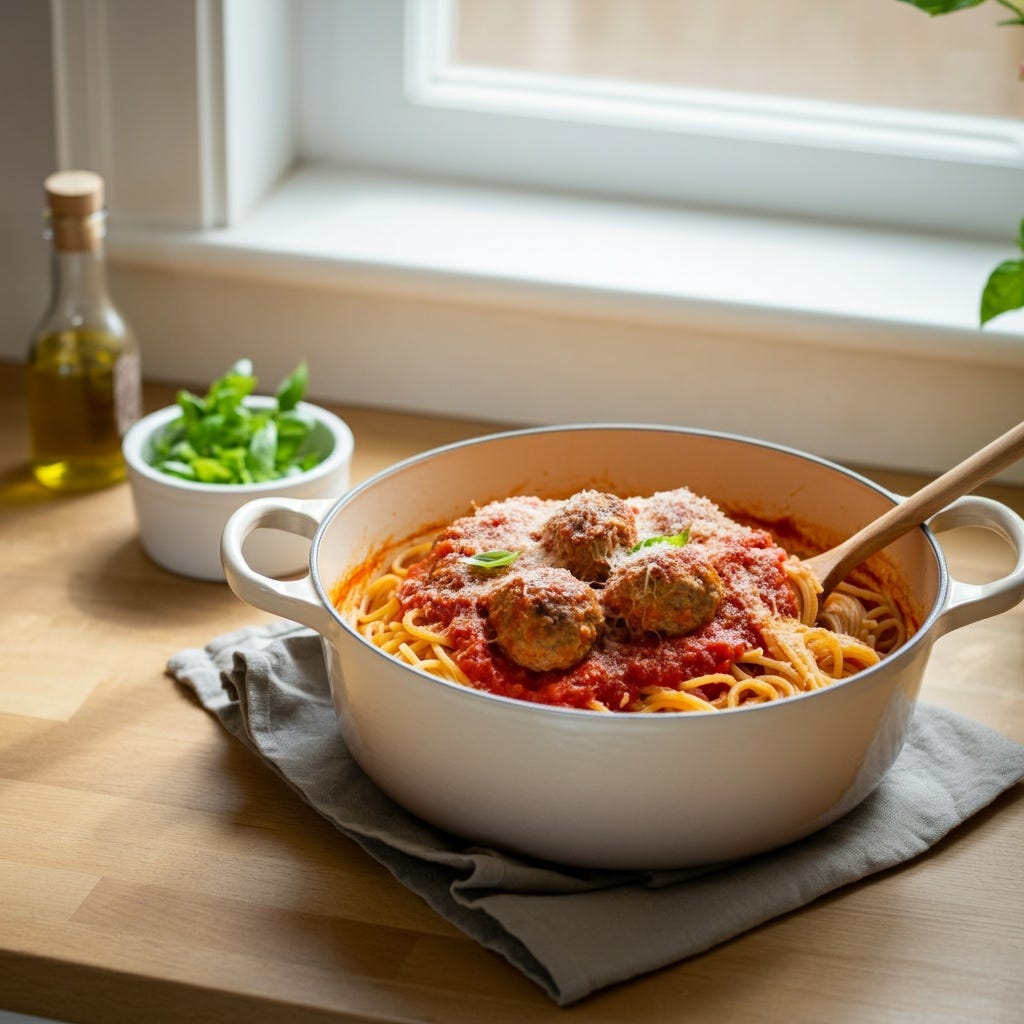
Add meatballs to hot tomato sauce, and gently simmer to warm meatballs through, about 10 minutes. Serve with extra grated parmesan cheese on the side, over al dente pasta, soft polenta or slice cooked meatballs and layer into homemade lasagna.
Cooking Tip of the Month:
Successfully Roasting Any Vegetable:

Roasting vegetables is a bit like alchemy—something magical occurs in the oven. The dry heat evaporates moisture, intensifying their natural flavors, while the fat promotes caramelization, transforming raw vegetables into something utterly irresistible. The key lies in choosing the right technique for each type of vegetable. There are, however, some rules that apply no matter which vegetable you are roasting:
The Vegetable Roasting Rules:
1.) Use a sturdy, rimmed sheet pan that won’t warp or buckle in your oven at high temperatures.
2.) Cut your vegetables the same size as much as possible to ensure even cooking.
3.) Coat your vegetables evenly with fat and any seasonings you are using. Fat is a conductor of heat which will help facilitate browning, and it will also bring the flavors of the vegetable out. My favorite fats for roasting are ghee, avocado oil or grapeseed oil for their high smoke points.
4.) Place them in a single layer on your sheet pan so there is even cooking and therefore even browning.
5.) Don’t overcrowd the vegetables on your sheet pan, otherwise you will create steam which will prevent your vegetables from browning.
6.) Roast at high temperatures (anything above 375 F) for moisture to be quickly evaporated away and therefore adequate browning can occur. Vegetables that cook quickly need a higher oven temp. So for asparagus or broccoli florets that cook quickly, crank your oven to 475 F or even 500 F. For something like winter squash or carrots, you would aim for about 425 F and roast a little longer.
7.) Preheat your sheet pan in your oven so it’s hot when you place your raw vegetables on it. This will ensure your vegetables are deeply browned and caramelized by the time they are tender. (I especially like to do this when roasting potatoes).
8.) Always account for “carry over cooking time” when roasting vegetables. Your vegetables will keep cooking on the hot sheet pan even after you take them out of the oven, so if your recipe says to roast asparagus for 8 minutes at 475 F, try pulling it out at 6 minutes and let it cook the rest of the way on the pan - that way it’s not overcooked by the time it gets to your plate.
Don’t forget to take advantage of my discount codes:
Visit my Amazon Store to shop the full list of my preferred equipment, cookbooks, ingredients and more! Find it here
That’s it for this issue, thank you so much for reading. See you next week and please be sure to tell a friend about The Kitchen Counter!
First off, that is the best set of instructions for roasting vegetables that I have ever used, so thank you!! So, I finally made the meatballs and I think next time roasting at 350 might do it? 450 had mine at a firm brown crust by 20 minutes. Maybe 400? Best tasting meatballs ever, EVER!
Made these last Sunday—yum!!! Looking forward to make again and again! Will try your suggestion in lasagna!!